How Much Do Custom Boxes Cost and What Drives the Price
November 05, 2026
Last Updated: November 4, 2026
Quick Summary
Custom boxes cost is a stack of charges, not one number: you pay a one-time setup fee for design, dies and printing plates, plus a per-unit charge for material, printing and assembly. Only the per-unit cost drops as quantity rises, so always compare setup and unit price separately.
- Folding cartons cost least per unit, corrugated mailers sit mid-range, and rigid boxes cost the most.
- Full-color printing and finishes like foil stamping each add a pass through the press.
- Divide setup by per-unit savings to find the break-even quantity before chasing a lower unit price.
- Total landed cost adds shipping, tax and unbundled setup to the quoted unit price.
- Ask for a delivered price rather than FOB origin so the freight line stays visible and comparable.
Table of Contents
- How Custom Boxes Cost Breaks Down Per Unit
- Custom Cardboard Box Cost by Box Style and Size
- Material, Printing, and Finishes That Move the Price
- Custom Mailer Boxes: Where the Money Goes
- Custom Boxes With Logo Wholesale: Volume Pricing and Minimums
- Cheap Custom Boxes Without Sacrificing Protection
- Total Landed Cost and the Fees Buyers Miss
- Get a Custom Packaging Quote That Matches Your Spec
- Frequently Asked Questions
How Custom Boxes Cost Breaks Down Per Unit
Custom boxes cost is rarely a single number. It is a stack of charges, and understanding that stack helps you compare quotes accurately. The same logic applies to most custom manufacturing projects: you pay for setup once, then for units, then for freight.
The first thing buyers get wrong is treating a quote as one price. It is not. Most suppliers separate setup cost from per-unit cost, and only the second number shrinks as you order more.
Setup Charges vs. Recurring Per-Unit Charges
Setup covers the one-time work: creating the design, building the cutting die, and dialing in the printing plates. You pay it once per order, regardless of quantity. Per-unit charges cover material, printing, and assembly, and they repeat for every box.
A common mistake is comparing quotes without checking whether setup is included. A low unit price with a large setup fee can cost more at small volumes than a higher unit price with setup waived. Ask for both numbers separately, every time.
Custom Cardboard Box Cost by Box Style and Size
Box style drives price more than any other variable. A folding carton made from thin paperboard is the cheapest option per unit because it uses less material and ships flat. A corrugated mailer costs more because the board is thicker and provides product protection during shipping. A rigid box sits at the top because it is assembled, wrapped, and built for retail packaging presentation.
Box size and box dimensions matter just as much. Larger boxes use more cardboard, and any dimension beyond a standard sheet size can trigger extra cutting waste. If your product fits a stock size, use it.
| Box Style | Typical Best For | Cost Position |
|---|---|---|
| Folding carton | Retail shelf, lightweight goods | Lowest |
| Corrugated mailer | Shipping and protection | Mid |
| Rigid box | Premium unboxing | Highest |
Best for: folding cartons suit retail displays. Skip if: your product needs impact protection in transit.
Material, Printing, and Finishes That Move the Price
Material choice sets the floor. Standard corrugated box grades cost less than specialty eco-friendly packaging stocks made from certified recyclable materials, which carry a premium. Full-color printing raises cost with every additional color, and print coverage matters: a small logo in single-panel print costs far less than edge-to-edge coverage on every panel.
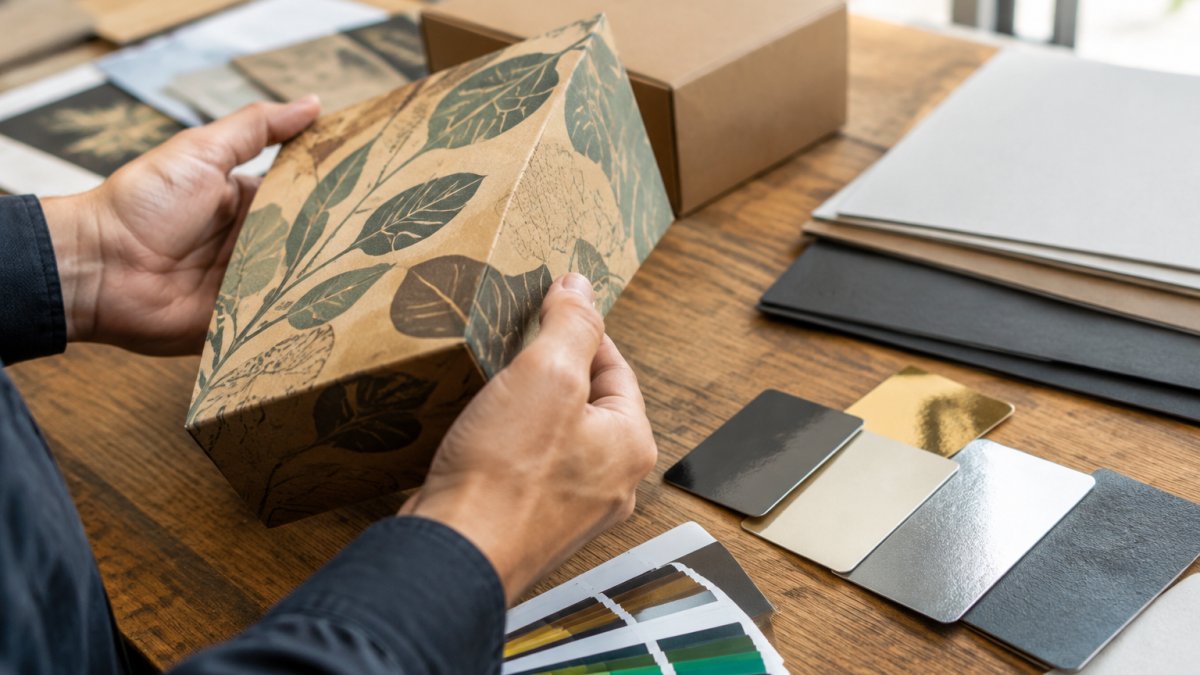
Finishes add the next layer. Matte lamination, foil stamping, and spot coatings each add a pass through the press. Customization beyond branding basics, such as die-cut windows or inserts, adds tooling. Ask which finishes are structural and which are purely cosmetic, then cut the cosmetic ones first when the budget is tight.
Custom Mailer Boxes: Where the Money Goes
The money goes into three places. First, the corrugated board grade, since mailers need crush resistance. Second, the print, because mailers are usually printed on the outside where customers see them. Third, the assembly, since mailers often ship flat but require taped or glued construction.
If your mailer only needs to survive transit, skip the premium print and put the budget into board strength. If it doubles as unboxing marketing, the print is the point, and it should be priced as a marketing cost, not a shipping cost.
Custom Boxes With Logo Wholesale: Volume Pricing and Minimums
Wholesale pricing rewards volume because setup costs spread across more units. Minimum order quantity is the gate: suppliers set a floor below which the setup charge cannot be recovered. Some offer low minimums at a higher unit price; others require a bulk order before volume pricing kicks in.
The mechanism is simple arithmetic. The per-unit charge never changed; only the setup spread did. That is why a quote that looks expensive at 500 units can be the cheapest option at 2,000.
A practical approach is to get quotes at three tiers: your realistic first order, double that, and the supplier's stated minimum. Compare the unit price at each tier. If the price barely moves, the supplier is not passing savings through. Lead time and turnaround time also shift with quantity, so confirm both before committing.
Break-Even Math for Larger Orders
Before you chase a lower unit price, calculate the break-even quantity. Divide the setup charge by the per-unit savings between tiers. If setup is $400 and the larger order saves $0.60 per box, you need to order at least 667 units for the savings to cover setup. Below that, the smaller order is cheaper in total dollars even though the unit price is higher.
Then add the costs the unit price hides: storage for the extra boxes, cash tied up in inventory, and the risk of obsolescence if your artwork or dimensions change. A common pattern is that the cheapest unit price belongs to the order size you can actually store and use within one artwork cycle, not the largest quantity the supplier will quote.
Watch out: comparing unit prices across suppliers without normalizing the setup charge, quantity, and included freight will make the largest order look best even when its total landed cost is higher.
Minimums and Logo Customization
Logo printing usually does not change the minimum order quantity, but it does change the setup. A one-color logo on one panel needs a single plate or screen; a multi-color logo needs one per color, and each adds a one-time charge. Ask whether the supplier charges per color or per print pass, and whether a digital print method avoids plates entirely at low volumes. Digital short-run printing often carries a higher per-unit charge but a much lower setup, which can win at low minimums.
Get the minimum, the setup breakdown, and the per-unit price at three quantities in writing. That single request turns a vague wholesale conversation into a comparable quote.
Cheap Custom Boxes Without Sacrificing Protection
Watch out: downgrading board grade to hit a price target is the most common way buyers end up with crushed shipments and replacement costs that erase the savings. Test a sample before you commit to a full run.
Total Landed Cost and the Fees Buyers Miss
The quoted unit price is not what you pay. Total landed cost adds shipping cost, tax, and any setup cost not bundled into the quote. Freight on bulky packaging is significant because boxes ship flat but still take up space, and rush orders carry surcharges.
What most guides leave out is how each fee is triggered and how to estimate it before the quote arrives. The table below is the worksheet we recommend; fill it in for every supplier so the comparison is like-for-like.
| Cost Line | What Triggers It | How to Estimate It |
|---|---|---|
| Setup and die charges | New design, new dimensions, new print plates | Ask for a one-time charge separate from per-unit |
| Dieline creation | Non-standard box style or size | Often bundled with die; confirm in writing |
| Samples and proofs | Pre-production approval | Request a sample cost and whether it is credited to the order |
| Freight to your dock | Weight, cube, distance, liftgate or residential delivery | Ask for a delivered quote, not FOB |
| Sales tax | Destination state and taxability of packaging | Confirm whether the supplier collects or you accrue |
| Rush or expedite fee | Lead time shorter than standard | Ask for standard vs. rush lead time and the delta |
| Storage | Full delivery you cannot warehouse | Price monthly storage per pallet |
Worked Example
Suppose a quote shows $1.10 per box at 1,000 units, with a $350 setup, $180 freight, and 7% sales tax. The unit price alone suggests $1,100. Add setup ($350) and freight ($180) for a pre-tax subtotal of $1,630, then apply tax to the taxable portion. If tax applies to the full subtotal at 7%, the landed cost is about $1,744, or roughly $1.74 per box. That is the number to compare, not $1.10.
Hidden Fees to Ask About by Name
Ask each supplier directly about: plate or screen charges per color, die storage fees if you reorder, artwork revision fees, minimum freight charges on small orders, fuel surcharges, and pallet or packaging fees for the shipment itself. A common pattern is that the supplier with the lowest unit price has the most line items after it, while the supplier with a slightly higher unit price bundles freight and waives setup on reorders.
Watch out: a quote marked FOB origin means you pay freight from the supplier's dock and absorb the risk in transit; ask for a delivered price so the freight line is visible and comparable.
Build the worksheet before you compare suppliers:
- Unit price × quantity
- Setup and die charges
- Sample and proof fees
- Freight to your dock (delivered, not FOB)
- Sales tax
- Rush or expedite fees
- Storage if you cannot take full delivery
Add the rows and compare the totals, not the unit prices. A supplier with a slightly higher unit price but included freight and no rush fee often wins.
Get a Custom Packaging Quote That Matches Your Spec
A quote is only useful if it matches your actual specification. Send suppliers your box dimensions, box style, board grade, print coverage, and finishes in writing, then ask for an instant quote breakdown showing setup, per-unit, and freight as separate lines. That is how you get a price comparison that means something.
Averon Cooling Solutions builds custom walk-in coolers, freezers and replacement doors made to your rough opening, shipped prehung with hardware installed and adjusted.
Request a quote from Averon Cooling Solutions for current pricing on your walk-in cooler, freezer or door requirements.
Frequently Asked Questions
How much do custom boxes usually cost?
A plain one-color mailer at high volume sits far below a full-color rigid box with foil and magnetic closure. Setup charges for plates or dies add a one-time fee that spreads across the run, so larger orders lower the per-unit price. Request an instant quote with your dimensions and quantity to get a real number.
What factors affect the price of custom boxes?
Order quantity and minimum order quantity change the unit price because setup cost is fixed. Shipping cost, tax, and lead time also affect the total. A small change in one dimension can push a box into a different cutting die, so confirm specs before you approve artwork.
Do custom boxes cost less when you order in bulk?
Volume pricing tiers usually start at a few hundred units and improve at higher counts. Ordering in bulk also reduces shipping cost per box. Balance that against storage space and design changes, since leftover stock of an outdated logo becomes waste.
How can I get an accurate quote for custom packaging?
Include whether the box is for retail packaging or shipping packaging, since that changes the board strength needed. Ask the supplier to itemize setup cost, unit price, shipping cost, and tax so quotes are comparable. Request a sample or digital proof and confirm lead time and turnaround time in writing.
