
Benefits of Heated Frames for Walk-In Freezers
October 09, 2026
Table of Contents
- What Heated Frames Do in Walk-In Freezers
- How Heated Frames Prevent Frost and Ice Buildup
- Walk-In Freezer Door Frame Heater Energy Use and Operating Costs
- Temperature Regulation and Door Seal Performance
- Walk-In Freezer Door Maintenance with Heated Frames
- Selection Criteria and Compatibility for Your Operation
- Frequently Asked Questions
Last Updated: October 9, 2026
What Heated Frames Do in Walk-In Freezers
A heated frame for a walk-in freezer is an electrically powered component installed around the door frame that prevents frost and ice accumulation at the opening, and understanding the benefits of heated frames for walk in freezers is essential for cold storage operations. At Averon Cooling Solutions, we've engineered heated frames to solve one of the most persistent problems in commercial cold storage: the buildup that forms where warm outside air meets the freezing interior environment.

The mechanism is straightforward but effective. Heating elements embedded in the frame maintain a temperature above the dew point, preventing moisture from condensing and freezing on the frame surfaces and door seals. This keeps the seal flexible and functional, which directly impacts how well the door closes and how much cold air escapes.
Without heated frames, frost accumulates quickly at the frame edges and gasket surfaces. That buildup compromises the magnetic seal, reduces door performance, and creates maintenance headaches. The problem intensifies in humid environments or high-traffic facilities where the door opens frequently. Heated frames address this at the source rather than treating it as an ongoing maintenance burden.
How Heated Frames Prevent Frost and Ice Buildup
Frost forms when moisture in warm air contacts cold surfaces and freezes. In a walk-in freezer, the frame and door seal sit at the boundary between inside and outside air. Without protection, this boundary becomes a frost-generation zone.
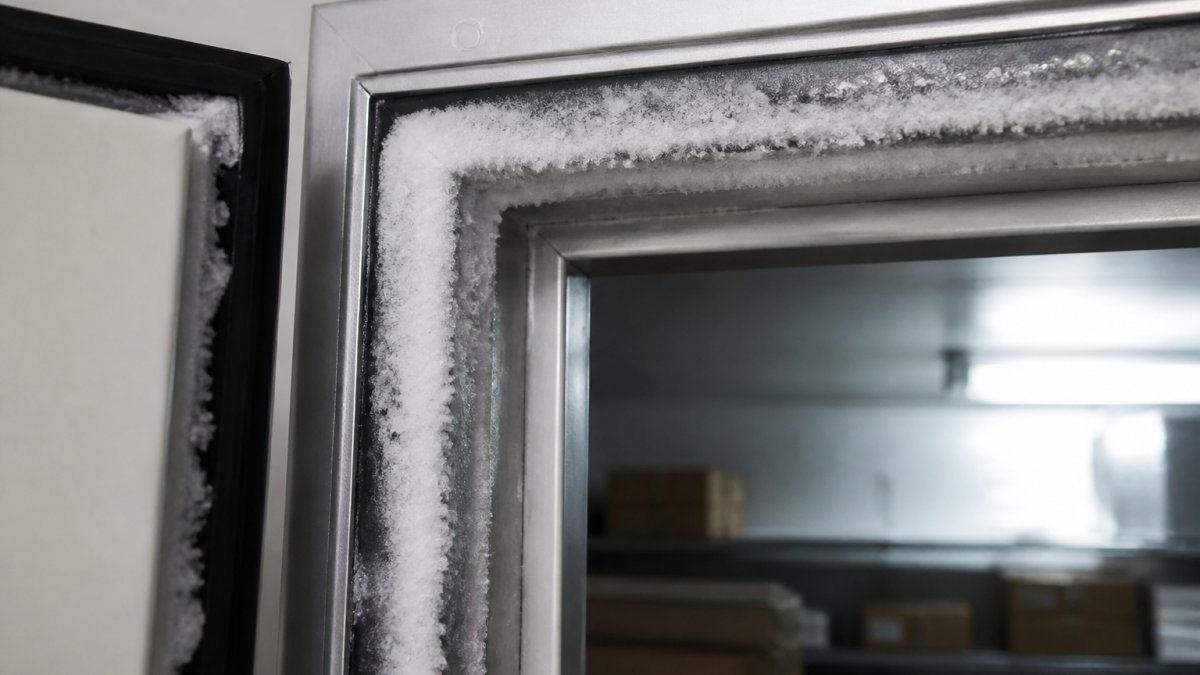
Heated frames work by maintaining the frame temperature above the freezing point of water. The heating wire or heating element runs continuously around the frame perimeter, warming the surface enough to prevent condensation. The result is a dry, frost-free frame that keeps the magnetic gasket pliable and effective.
Temperature regulation matters here. The frame needs to stay warm enough to prevent freezing but not so warm that it creates excessive heat loss or energy waste.
The practical benefit is immediate. Doors open and close smoothly. Seals maintain their grip. You don't spend time chipping ice off the frame or replacing damaged gaskets prematurely. In facilities with high humidity or frequent door cycles, the difference is noticeable within days.
Walk-In Freezer Door Frame Heater Energy Use and Operating Costs
Heated frames consume electrical power continuously, which raises a legitimate question: what does this cost to operate, and does it ever pay for itself?
Start with the load. A 36" x 78" door with a surface-mount heated panel frame draws less, often 250-400 watts, because the heated perimeter is shorter.
That number only makes sense next to what an unheated door costs you. Three cost centers move when a freezer frame ices up:
- Compressor runtime. A gasket that cannot seal lets cold air escape and warm, humid air enter. The refrigeration system responds by running longer and cycling more often. The compressor is the single largest electrical load in a walk-in freezer, so even a modest increase in runtime typically dwarfs the heater's draw.
- Defrost cycles. Frost on the frame and coil drives more frequent and longer defrost cycles. Electric defrost elements are high-wattage by design, and every extra cycle is energy the heater never asked for.
- Labor and parts. Chipping ice, replacing gaskets early, and emergency service calls are real dollars. A gasket that never freezes avoids the freeze-thaw cracking that shortens its life.
Averon Cooling Solutions includes replaceable anti-condensate heater wire in our freezer doors with heated frames, making maintenance straightforward and cost-effective. If a heating element fails, you replace the wire rather than the entire frame assembly, a parts cost measured in tens of dollars instead of a full frame replacement.

There is a real upper bound on the trade-off. In a dry, low-traffic freezer that rarely ices up, the heater's continuous draw may not be fully offset by avoided compressor runtime, and the payback is mostly in gasket life and labor. In a humid, high-traffic facility, the avoided refrigeration load and maintenance almost always exceed the heater's cost. The honest calculation is facility-specific: measure compressor runtime and defrost frequency before and after, and compare that delta against the heater's metered draw.
One control detail matters for cost. Some heated frames run continuously; others use a door switch or thermostat so the heater only energizes when the door is closed or when frame temperature drops below a set point. A door-switch-controlled heater can cut its own runtime substantially in low-traffic freezers without sacrificing frost protection. If energy use is a concern, ask whether the frame supports switched or thermostatic control before you buy.
Finally, remember that the heater is not fighting the refrigeration system, it is protecting the boundary between conditioned and unconditioned air. The goal is not to warm the freezer; it is to keep the frame surface above the dew point so moisture never condenses and freezes in the first place. Done correctly, that is a very small amount of heat applied in a very specific place.
Temperature Regulation and Door Seal Performance
Door seal performance depends on the gasket material staying flexible. Most commercial freezer gaskets are magnetic vinyl compounds that work best when they're not frozen solid.
When frost accumulates on the gasket, it creates a hard, brittle surface that doesn't compress properly against the frame. The seal becomes intermittent, some areas contact the frame, others don't. Cold air leaks out. Warm air leaks in. The freezer temperature fluctuates.
Heated frames maintain consistent frame temperature, which keeps the gasket in its optimal operating range. A flexible gasket compresses evenly, creating an airtight seal across the entire door perimeter. That consistency is what prevents temperature drift and maintains food safety conditions.
The relationship between frame temperature and seal performance is direct. A frame that's 5°F warmer than the surrounding area keeps the gasket 10-15°F warmer than it would be without heating. That difference moves the gasket from brittle to pliable. From leaking to sealing.
This matters for facilities storing temperature-sensitive products. Dairy, frozen proteins, ice cream, and pharmaceutical products all require strict temperature control. A door that seals properly prevents the temperature swings that can damage product quality or violate storage requirements.
Walk-In Freezer Replacement Door 72" x 84" — Prehung with Heated Frame →
Walk-In Freezer Door Maintenance with Heated Frames
Maintenance requirements actually decrease when heated frames are part of the system.
Without heated frames, frost removal becomes a regular task. Staff chip ice off the frame, wipe gaskets, and manage the moisture that keeps coming back. This is time-consuming, inefficient, and puts stress on the gasket material every time someone scrapes it.
With a heated frame, the frame stays dry. The gasket stays clean and flexible. Maintenance shifts from reactive (removing frost) to preventive (checking the heater operation and inspecting the gasket for wear), which is one of the key benefits of heated frames for walk in freezers.
The heater itself requires minimal attention. Most modern frame heaters are solid-state designs with no moving parts. They either work or they don't. If the heating element fails, you notice it immediately when frost starts reappearing. Replacement is straightforward, disconnect the old wire, install the new one, test it.
Gasket maintenance becomes simpler too. A gasket that's never frozen stays more durable. It doesn't develop the micro-cracks that form when vinyl expands and contracts with freeze-thaw cycles.
The time savings compound. No ice chipping. No emergency maintenance calls because the door won't seal. No product loss from temperature fluctuations. Facilities operating multiple freezers across different locations see meaningful labor savings when heated frames prevent the frost-management cycle.
Selection Criteria and Compatibility for Your Operation
Choosing the right heated frame is a specification exercise, not a catalog pick. Four variables drive the decision: the opening, the heater type, the electrical supply, and the control method. Get those right and the frame will outlast the door.
Start with the rough opening. Frame heaters come in three basic configurations: embedded in sandwich-panel frames, surface-mounted over an existing frame, or integrated into a prehung door assembly. Your opening size and existing infrastructure determine which option works.
Averon Cooling Solutions manufactures heated frames in multiple configurations. Our Walk-In Freezer Replacement Door 72" x 84" with Heated Frame comes prehung with heating components installed and adjusted, ready for freight delivery and installation. For smaller openings or existing frames, our Walk-In Freezer Replacement Door 36" x 78" with 4" Heated Panel Surface-Mount Frame mounts flush over the opening without modification.
Match the heater type to the failure mode. Two heater families dominate: resistance wire embedded in the frame, and self-regulating heating cable. For most walk-in freezer doors, embedded resistance wire with a replaceable element is the practical choice because service is a wire swap rather than a frame rebuild.
Confirm the electrical supply.
Decide how the heater is controlled. Continuous operation is the simplest and the most common. Door-switch control energizes the heater only when the door is closed, which saves energy in low-traffic freezers. Thermostatic control modulates output based on frame temperature.
Weigh the operating environment. High humidity accelerates frost formation, so heated frames matter more in humid climates and in facilities that wash down floors or handle thawing product nearby. Door frequency matters too: a door that opens dozens of times per shift benefits far more than one that opens a few times a day.
Plan for installation and code. Heated frames are a permanent electrical appliance, not a trim piece. Installation should follow the manufacturer's instructions, use the specified fasteners and sealants, and preserve the thermal break between the frame and the wall.
| Selection Factor | Consideration | Impact |
|---|---|---|
| Opening size | Frame heater must match your rough opening dimensions | Determines which product configuration fits |
| Heater type | Embedded resistance wire vs. self-regulating cable | Affects cost, serviceability, and failure mode |
| Voltage and circuit | Typically 120V; confirm circuit capacity and grounding | Required for safe, code-compliant operation |
| Control method | Continuous, door-switch, or thermostatic | Trades energy savings against added service surface |
| Humidity level | High humidity accelerates frost formation | Heated frames more critical in humid climates |
| Door frequency | How often the door opens per shift | Higher traffic justifies heated frame investment |
| Seal condition | Current gasket wear and performance | Heated frames extend gasket life significantly |
| Installation timeline | How quickly you need the door operational | Prehung options from Averon ship in approx. 3-4 weeks |
Compatibility with existing refrigeration systems is straightforward. The frame heater operates independently of the refrigeration compressor, so there is no conflict or interference. The only shared resource is electrical capacity, and that is a panel question, not a refrigeration one.
Frequently Asked Questions
What is a heated frame on a walk-in freezer?
A heated frame is a door frame component that contains anti-condensate heater wire running along the frame perimeter. The wire warms the frame surface to prevent moisture from condensing and freezing on the door edges and seals. This keeps the frame above the dew point, stopping frost and ice buildup that can interfere with door operation and create air leaks that waste energy.
Why do walk-in freezer door frames need heat?
Walk-in freezer door frames sit at the boundary between the ultra-cold interior (typically -10°F to 0°F) and the warmer exterior environment. Moisture-laden air from outside condenses on the cold frame surface and immediately freezes. Without heat, ice accumulates on the frame, preventing the door from sealing properly, allowing cold air to escape, and making the door difficult or impossible to open. Heated frames maintain the frame temperature above freezing, eliminating this problem.
Do heated frames use a lot of electricity?
Heated frames consume modest power compared to the refrigeration system itself. The energy cost is offset by improved door seal integrity, which prevents cold-air leakage that would otherwise force the compressor to run harder and longer, ultimately reducing overall operating costs.
How do you tell if a walk-in freezer frame heater is failing?
Signs of heater failure include visible frost or ice buildup on the door frame and seals, difficulty opening or closing the door due to ice friction, condensation and icing on the interior frame edges, and a rise in box temperature caused by air leakage. You may also notice the heater wire is not warm to the touch (when safe to check). Inspect the replaceable anti-condensate heater wire for breaks or corrosion. If the wire is damaged, it can be replaced without replacing the entire frame assembly.